
 Quality Assurance
 Real-Time Analytics
 Sample Marketplace
 Survey Builder
 Calibr8
 API & Integrations
 Custom Scripting
 Multi-Language Support
 White-Label Solutions
 Brand & Advertising Research
 Competitive Intelligence
 Customer Experience Studies
 Market Segmentation
 Product Testing & Feedback
 Academic Research
 Financial Services Research
 B2B Professional Panels
 Consumer Research Panels
 Global Panel Network
 Premium Provider Partners
 Social Media Recruitment
 Fraud Detection System
 Profile Verification
 Quality Scoring Algorithm
 Real-Time Quality Monitoring
 Response Time Analysis
 Blog & Insights
 Case Studies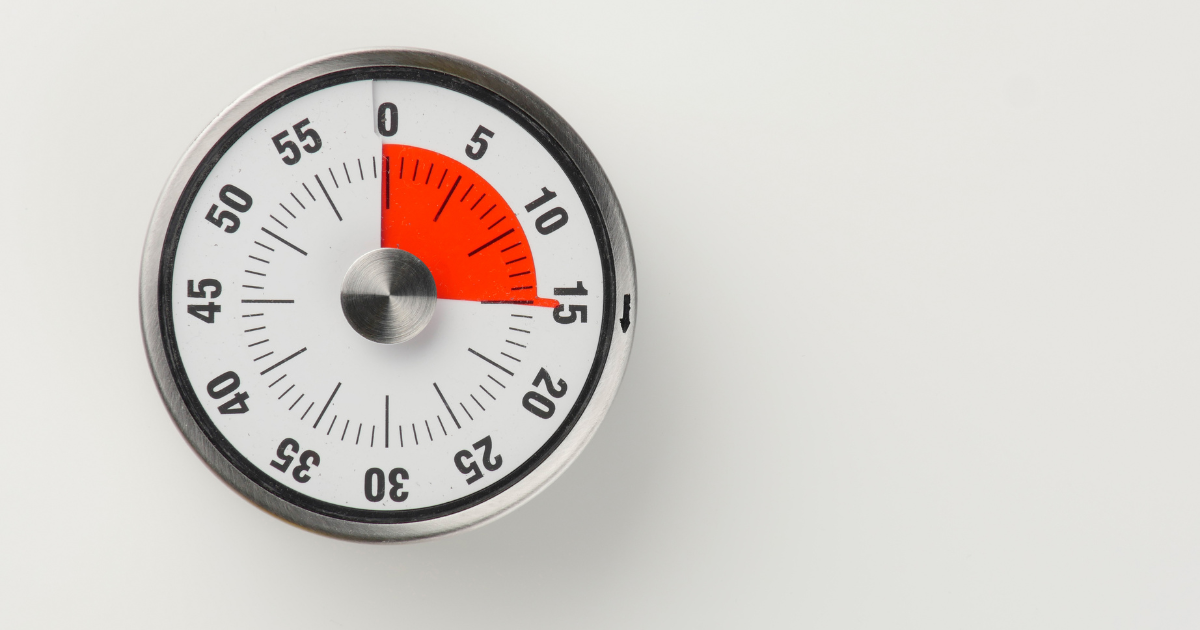
Read time: 4 mins
Survey data quality after 15 minutes changes in predictable and measurable ways, with attention loss, fatigue, and shifting motivations affecting everything from open-end richness to model stability. As respondents move beyond this threshold, patterns appear across cognitive and statistical indicators that signal reduced reliability. Understanding these effects is essential for designing questionnaires that produce stronger, more accurate insights.
Key Takeaways
- Data quality declines after the fifteen-minute threshold, with increased fatigue, lower richness, and more contradictory responses.
- Extended surveys flatten datasets, reduce variance, and weaken segmentation or modeling accuracy.
- Shorter instruments improve engagement, completion rates, and the overall reliability of insights.
Executive Summary
Survey length has a measurable impact on respondent attention and data accuracy. Once surveys extend past the fifteen-minute mark, dropout increases, open end richness decreases, and behavioral patterns begin to show signs of fatigue. These shifts are consistent across industries and audience types and can reduce the reliability of statistical modeling and attitudinal measures.
This paper outlines the cognitive and statistical effects of extended surveys and explains why shorter, more focused instruments produce stronger outcomes. It also provides practical guidance for teams designing studies that require depth without sacrificing quality.
Introduction
Survey length is one of the most influential and underestimated factors in data quality. After a certain point, respondent attention declines, motivation changes, and behavioral patterns shift. The most common threshold is fifteen minutes. Beyond this point, measurable and repeatable changes appear across thousands of studies.
This paper summarizes what happens inside the data when surveys exceed this length and why researchers benefit from designing shorter and more focused instruments.
The Cognitive Side of Drop Off
Attention is not a constant. As respondents move through long questionnaires, their cognitive load increases and their willingness to process complex questions decreases. This affects both speed and depth.
Common indicators include:
• Higher straight lining
• More frequent contradictory answers
• Lower richness in open ends
• Faster skipping of optional questions
• Increased dropout during complex sections
These patterns appear across B2C and B2B studies and align closely with findings from cognitive psychology.
The Statistical Effects
When attention declines, the datasets begin to flatten. Differences between segments shrink and variance becomes unreliable. For studies using segmentation, conjoint, MaxDiff, or any model requiring distributional accuracy, this flattening reduces the power of the analysis.
Zamplia’s internal comparisons between shorter and longer surveys show:
• A drop of up to 35 percent in open end concept variety
• Up to 50 percent more inattentive indicators in the final quarter of long surveys
• Earlier abandonment by high value niche groups, which skews representation
• Less reliable responses to complex trade off tasks
These issues make modeling less stable and increase the risk of false positive patterns.
Time, Motivation, and Quality
Respondents who stay in long surveys often shift from engaged participation to completion focused behavior. This transition is subtle but measurable. The final portion of an extended survey frequently contains the least reliable data, even when it appears complete.
This is why best practice guidelines recommend reducing non essential sections or splitting long surveys into phases.
What Researchers Gain by Shortening
Shorter surveys benefit both respondents and data users.
Teams see:
• More thoughtful and consistent responses
• Higher completion rates among targeted demographic groups
• More stable modeling outputs
• Better open end quality
• Lower replacement cost and faster fielding
Conclusion
Survey length matters. The fifteen-minute mark is not arbitrary. Beyond this point, measurable declines in both engagement and accuracy occur. Designing concise, purpose driven questionnaires protects data quality and strengthens the conclusions drawn from it.
FAQs
Attention drops, cognitive load increases, and behaviors like straight-lining, rushing, or skipping optional questions become more common.
Variance shrinks, segments become harder to distinguish, and trade-off tasks produce less reliable distributions.
Shorter surveys preserve engagement, improve completion among niche groups, and produce stronger open-end and modelling quality.